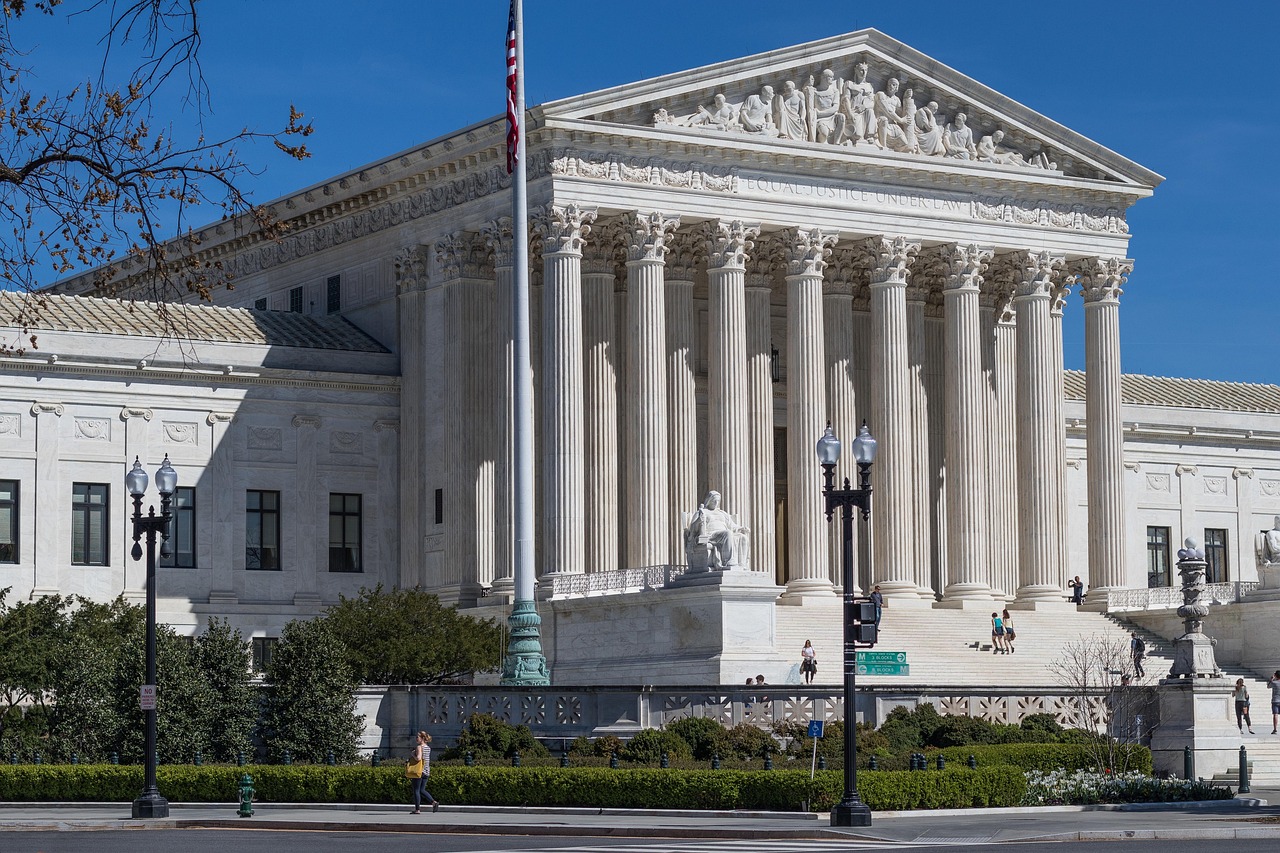
WASHINGTON – The Trump administration asked the U.S. Supreme Court on Monday to lift lower court rulings blocking a presidential executive order that would tighten mail-in voting rules in more than twenty states, pushing a major elections dispute to the justices roughly three months before the November midterms.
In an emergency application, Solicitor General D. John Sauer asked the court to put on hold a district court injunction that has kept the order from taking effect in the states that sued to block it. It is the first time one of the president’s election directives has reached the Supreme Court, and the administration’s thirty fifth emergency request to the court overall.
The application went first to Justice Ketanji Brown Jackson, who handles emergency matters arising from the First Circuit. Jackson ordered the states to file a response by 4 p.m. on August 3, a procedural step that sets the schedule for the court rather than a ruling on the merits. A ruling could follow within days of that deadline, though the court has not said when it will act.
Sauer told the justices the order amounts to general policy guidance rather than a binding directive, since the Postal Service and the Department of Homeland Security have not finalized the regulations needed to carry it out, and he argued the injunction improperly interferes with the president’s authority over the executive branch while the case proceeds. He wrote that any new procedures would need to be in place by early or mid August to affect the November 3 election.
The order, signed March 31 and titled Ensuring Citizenship Verification and Integrity in Federal Elections, directs the Department of Homeland Security to compile state citizenship lists using federal databases and would bar the U.S. Postal Service from delivering mail-in ballots to any voter not on those lists. It also sets new envelope and tracking standards for absentee and mail ballots and directs the Justice Department to prioritize investigating local election officials who send ballots to voters the administration deems ineligible.
A coalition of twenty three states and the District of Columbia, led by California, sued in federal court in Massachusetts, arguing the Constitution assigns control of elections to the states and that the president cannot unilaterally rewrite mail voting procedures. U.S. District Judge Indira Talwani agreed on June 25, ruling that the citizenship list and Postal Service provisions exceeded the president’s authority, and blocked those sections in the states that sued, including California, Massachusetts, Maryland, Arizona, Maine and New Mexico.
A divided panel of the First Circuit Court of Appeals declined last Saturday to lift Talwani’s injunction while the administration’s appeal continues. The majority wrote that letting the order take effect for elections in September and November would sow confusion and risk disenfranchising eligible voters, noting that some local election offices had already adjusted their preparations, and in some cases purchased ballot envelopes, in anticipation of the rule.
A spokesperson for California Attorney General Rob Bonta said the state looks forward to filing its response by the deadline Jackson set. Bonta has argued the order mirrors an earlier citizenship verification push that federal courts already blocked. Twelve Republican state attorneys general have intervened in the case to defend the order.
Richard Hasen, an election law professor at the University of California, Los Angeles, has written that the president lacks authority to reshape mail balloting through executive action and has said separately that the changes were unlikely to take effect for this year’s elections regardless of how the litigation concludes.
The case reaches the court in a term that has already produced two rulings on mail ballot procedures without a consistent outcome for either party. In June, the justices voted 5 to 4 in Watson v. Republican National Committee to uphold a Mississippi law counting ballots postmarked by Election Day and received up to five business days later, with Justice Amy Coney Barrett writing for a majority joined by Chief Justice John Roberts and the court’s three Democratic appointees. Earlier in the term, the court ruled 7 to 2 in Bost v. Illinois State Board of Elections that candidates have standing to challenge ballot counting rules, a decision widely read as inviting further litigation over receipt deadlines.
If the justices grant the administration’s request, federal agencies would have a narrow window to begin implementing the citizenship list and mail ballot provisions before November. If the injunction stays in place, the order remains blocked in the states covered by the lawsuit while the broader challenge continues in the lower courts. A separate federal appeals court in Washington has already lifted a broader injunction covering the Postal Service rule elsewhere, leaving open the possibility that some restrictions could proceed in states outside this case.