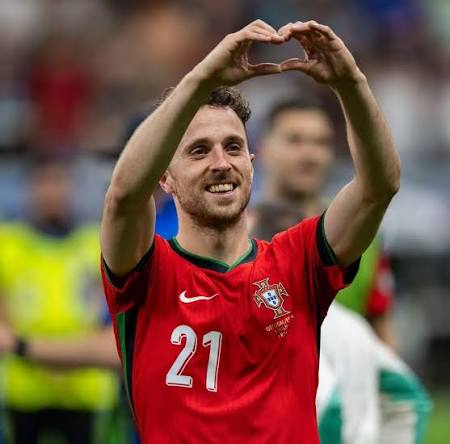
A tearful anniversary collided with a dramatic knockout win in Toronto, and Ruben Neves was on the pitch when it happened.
Portugal’s players walked out in Toronto on Thursday night knowing exactly what date it was back home. By the time the final whistle blew on their 2-1 win over Croatia, it was already July 3 in Portugal, the day the entire country marks the deaths of Diogo Jota and his brother André Silva.
A year ago, the two brothers were driving through northern Spain when a tyre burst on their car while overtaking on the A-52 motorway near Zamora. The vehicle left the road and caught fire. Jota, 28, and André, 25, were killed instantly. Jota had married his longtime partner, Rute Cardoso, only eleven days earlier, and he left behind three children.
The anniversary landed on the same night Portugal needed a knockout win to stay alive in the World Cup, and the symbolism was hard to miss. Croatia took the lead through Ivan Perisic just after half time, but Cristiano Ronaldo levelled from the penalty spot, then Gonçalo Ramos headed home a stoppage-time winner to send Portugal through to face Spain in the round of 16. Ronaldo left the pitch in the closing stages to a standing ovation, replaced by Ruben Neves, one of Jota’s closest friends in football.
Neves and Jota came through Wolverhampton Wanderers together, arriving in England as young players trying to make an unfamiliar league work for them. That bond never really ended. Neves has said publicly that he still messages Jota through their old national team WhatsApp group whenever something significant happens in his career or life, and that he keeps every one of those conversations saved. It’s a small, private way for him to keep talking to a friend who isn’t there to answer.
Portugal’s tribute this week wasn’t limited to gestures on the pitch. Players wore wristbands in the national colours as a mark of remembrance throughout the tournament, and head coach Roberto Martinez has repeatedly credited Jota as a foundational figure in the squad’s culture, pointing to the 2019 Nations League title as proof of what he built. Martinez has called Jota the team’s light and its example, the player whose belief in what was possible pushed the rest of the group forward.
At Liverpool, where Jota spent five seasons and scored 65 goals in 182 appearances, the club retired his number 20 shirt across every level last July, a rare honour typically reserved for the very few players a club considers irreplaceable. Manager Arne Slot has spoken about the scale of the loss inside the dressing room, describing Jota as someone who was never just a player to his teammates but a genuine friend. A permanent memorial was unveiled at Anfield this week ahead of the anniversary.
The investigation into the crash concluded that a burst tyre caused Jota to lose control while attempting to overtake on the motorway. He and his brother had been travelling to Santander to catch a ferry back to England, a route Jota chose because he’d recently had minor surgery and had been told not to fly. It was a mundane, practical decision that turned into tragedy within hours.
What has stayed with people, in Portugal and at Liverpool alike, isn’t just the abruptness of the loss but the timing of it. Jota had just won the Premier League. He’d just gotten married. He was 28, with what looked like years of football still ahead of him. That contrast, a life at its peak cut short without warning, is part of why the story resurfaces so strongly a year later, and why so many people are searching for details again this week.
A biography commissioned by the Portuguese Football Federation, written by journalist José Manuel Delgado, was released around the anniversary. Delgado spoke to dozens of people close to Jota, including his wife and parents, for a book he has described as less about football and more about the person underneath it. He has said the interviews were painful for everyone involved but something people wanted to do anyway, because they felt they owed Jota that much.
For Portugal, the next task is Spain in the round of 16, a fixture that will carry its own weight given the rivalry between the two federations. But for one night in Toronto, the football itself felt secondary to what the date meant. A team that lost one of its central figures a year ago found a way to win in the final minute of a knockout game, on the exact day it happened, with his closest friend in the squad stepping onto the pitch just before the final whistle. Nobody scripted that. It happened anyway.