
Nearly five months after Nancy Guthrie vanished from her Tucson home, a flurry of new ransom communications and a dramatic clash between federal investigators and a major media outlet have pushed the case back into the national spotlight, with no arrest yet in sight.
A Case That Refuses to Go Cold
TUCSON, Ariz. — The Pima County Sheriff’s Department is at the center of fresh scrutiny this week as investigators field yet another anonymous ransom communication, rebuke media interference, and hear renewed predictions from former federal agents that a breakthrough could be weeks away.
Nancy Guthrie, 84, the mother of NBC Today co-anchor Savannah Guthrie, has not been seen since the early hours of February 1, 2026, when she is believed to have been abducted from her home in Tucson’s Catalina Foothills neighborhood. What began as a missing persons investigation was subsequently upgraded to a homicide case. No suspect has been publicly named, and her whereabouts remain officially unknown.
What Happened: The Latest Ransom Note
On June 25, entertainment outlet TMZ reported receiving a new email from a person who had previously contacted the site multiple times using what TMZ described as a consistent IP address. In the latest message, the writer claimed to possess a hidden phone containing video footage of the “main guy” alongside Guthrie on what the sender described as “probably her last” day alive.
The sender also claimed knowledge of two individuals responsible for the abduction, stating the device held photographs, names, home addresses, and ages of both suspects. In exchange for the phone’s location and password, the sender demanded one Bitcoin — valued at roughly $60,000 to $67,000.
TMZ requested a screenshot of Guthrie from the alleged footage as verification. The sender declined, citing fear that the kidnappers might identify him through any circulating image.
Official Statements: Sheriff Nanos and the FBI
Nanos Calls It Another Fake
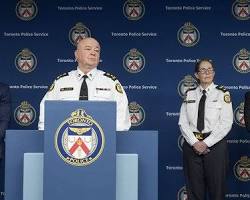
Pima County Sheriff Chris Nanos addressed the new claim during an appearance on KVOI AM 1030’s Buckmaster Show on Friday, June 26. He offered little encouragement that the latest communication held merit.
“I think the FBI has done a number of arrests for false or fake ransom notes,” Nanos said during the broadcast. “It’s a shame that that happens, but I think we’re looking at another one of those today with what’s been reported, but we’ll let the FBI do their work.”
The sheriff acknowledged that some earlier communications remained under active review by federal investigators. “Those two… that someone believes may or may not have some legitimacy to them, and the FBI is working that,” he said. “I can’t tell you much more on that, because it would be inappropriate. It is ongoing.”
Nanos also pushed back against the broader disruption that high-profile cases tend to attract, criticizing individuals who “get out and disturb, in this case, an entire neighborhood” — an apparent reference to the recent arrests of content creators who had visited Guthrie’s Catalina Foothills block.
FBI Shuts Down TMZ Documentary Plan
In a parallel development that drew significant attention, TMZ founder Harvey Levin revealed over the weekend that he had pitched the FBI on a plan to pay the one-Bitcoin demand himself and document the resulting cryptocurrency trail as part of a TMZ documentary.
Levin told CBS News producer Anna Schecter that he had contacted federal investigators approximately a month ago with the proposal. “What if we do a documentary, and we put that money in the bitcoin address and follow the path and where it goes?” he said he asked them.
After making what he described as six unanswered calls and feeling that agents had “ghosted” his team, Levin said the FBI finally responded — with a clear directive. “I did get a call back this week and they asked us to stand down, to not do the documentary,” Levin told Schecter. “I was told that they feel like they’re making progress in terms of identifying this person, and they think they can do that.”
The FBI’s instruction to halt the documentary was interpreted by some observers as a sign that investigators are actively pursuing whoever is behind the email chain, regardless of whether they consider the sender to have legitimate information.
Expert Analysis: Profilers Skeptical of All Communications
FBI Profiler Rejects Every Note
Retired FBI profiler James Fitzgerald, best known as the principal subject of the Manhunt: Unabomber television drama, spoke with NewsNation senior correspondent Brian Entin on June 26 and was unequivocal in his assessment.
“This guy, I don’t think he’s legit. I’m gonna say that upfront,” Fitzgerald told Entin. He went further, extending that skepticism beyond the most recent message. “I’m not sure any communication — and people are calling them notes, letters, whatever, posts, but I’m just going to call them communications, however they showed up — I don’t think any of them are authentic. And that includes this most recent one.”
Fitzgerald argued that a genuine informant with knowledge of two kidnappers would go directly to law enforcement rather than a media outlet, precisely because leaking publicly would alert the suspects. He also questioned the financial logic. “Why would he risk himself for, and if I’ve done the math right, I think — one Bitcoin today is worth like $61,000? That’s not a whole lot of money to put your life on the line.”
A Counterpoint: “Red Hot” Investigation
Former FBI special agent Jennifer Coffindaffer offered a sharply different tone regarding the investigation’s trajectory. Speaking in an interview published June 27, Coffindaffer said she remains confident the case will reach a resolution in the near term.
“In terms of future predictions, I essentially 100 percent believe this will be solved. I’m not 90 percent sure. I’m 99 percent sure it will be solved,” she told Men’s Journal. She added that she still expects meaningful movement by approximately August 1, though she allowed for the possibility of developments arriving before or after that date.
Coffindaffer described the investigation as “red hot” — not dormant, as the public absence of an arrest might suggest. She pointed to the volume of forensic evidence still being processed, including DNA samples that can take months to fully analyze, and the painstaking work of tracing potential vehicle movements through surveillance footage from multiple camera vantage points.
A separate retired FBI agent, Maureen O’Connell, told the Megyn Kelly Show that investigators are “getting close” to identifying the masked individual — dubbed the “porch guy” — captured on Guthrie’s Nest doorbell camera the morning of her disappearance. “I think they’re getting close to the ‘porch guy.’ And when they get the porch guy, the floodgates will swing open,” O’Connell said, estimating her confidence in an imminent arrest at 75 percent.
Background and Timeline
Nancy Guthrie was last seen at her Catalina Foothills residence on the evening of January 31, 2026. The following morning, February 1, she was reported missing. Authorities quickly classified the case as a suspected kidnapping after finding several disturbing indicators at the property.
Key evidence confirmed by investigators:
- Blood traces on the front porch and the surrounding street, leading away from the home
- Doorbell camera footage showing a masked, armed individual tampering with the device; the suspect is described as approximately 5-foot-9 to 5-foot-10 with a medium build
- The suspect was seen carrying a black Ozark Trail backpack
- Pacemaker data connected to a mobile app recorded activity until approximately 2:28 a.m., then stopped abruptly
- A single strand of hair recovered from inside the residence
- Multiple surveillance clips collected from the surrounding neighborhood
- Signs of forced entry
The case was initially investigated by the Pima County Sheriff’s Department before the FBI’s Phoenix field office joined. It was later officially reclassified as a homicide investigation. Authorities have publicly ruled out only Guthrie’s adult children and their spouses as potential suspects.
On February 2, a ransom note sent to two local Tucson television stations and to TMZ demanded millions of dollars in Bitcoin from the Guthrie family. A second communication, reportedly sent from the same IP address, claimed that Nancy had died during or after her abduction and had been “buried with nature.” Savannah Guthrie and her siblings posted a video appeal to the kidnappers on February 7.
Investigation Status: Where Things Stand
Despite the volume of communications, searches, and forensic work logged since February, no arrests have been made in connection with Guthrie’s disappearance. The reward now stands at more than $1.1 million, combining the Guthrie family’s $1 million offer and a separate $100,000 commitment from the FBI.
A volunteer search near the Arizona-Mexico border conducted after an anonymous tip suggested Guthrie’s remains might be buried in the region returned nothing conclusive. A fresh grave search in Mexico has since been reported as resuming.
The Pima County Sheriff’s Department has also faced internal turbulence during the investigation. In May, two members of the Pima County Board of Supervisors called on Sheriff Nanos to resign, citing allegations that he had lied under oath about his past record as a law enforcement officer in Texas before joining the department in the 1980s. Nanos has not publicly addressed those allegations in detail, and it remained unclear whether the board had the votes to move forward with any formal action. Additionally, a PCSD deputy unrelated to the Guthrie investigation was arrested in March on a kidnapping charge and subsequently fired.
Why This Matters
The Nancy Guthrie case has drawn prolonged national attention not only because of her daughter’s public profile but because it touches on several unresolved questions about high-profile kidnapping investigations: how law enforcement should handle media-adjacent ransom leads, the challenge of separating opportunistic fraud from potentially legitimate tips, and the legal bar required to prosecute a homicide without a body.
Legal experts have noted that no-body homicide prosecutions are viable but require a high standard of circumstantial and forensic evidence. The pacemaker data, doorbell footage, blood evidence, and DNA samples may eventually serve that purpose — but only if investigators can connect them to an identified suspect.
What Happens Next
The FBI’s decision to instruct TMZ to stand down suggests federal agents believe they are closing in on at least the identity of the email sender — though whether that person has genuine knowledge of the abduction or is a fraudulent opportunist remains unconfirmed. Former agents expect the “porch guy” identification to be the pivotal moment that unlocks the broader investigation.
Savannah Guthrie has remained publicly visible throughout, returning to the Today show in April after a two-month absence. In a recent on-air moment, she acknowledged the personal toll: “Her family cannot be at peace, no matter how much I try to come out here every day and smile and find that joy.”
Anyone with information is urged to contact the FBI tip line at 1-800-CALL-FBI or Tucson’s anonymous 88-Crime hotline at 1-520-882-7463.