
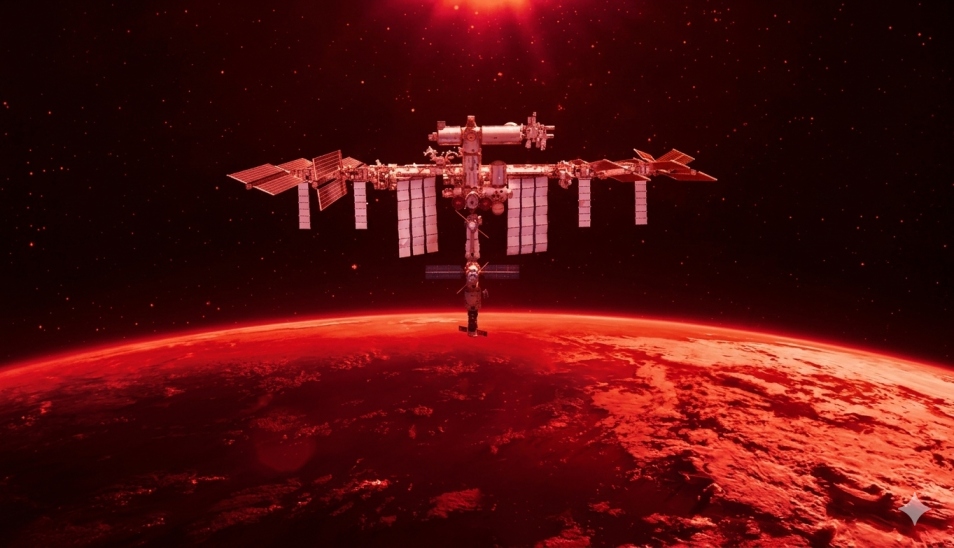
CAPE CANAVERAL — A high-stakes safety rift between NASA and Russia’s space agency, Roscosmos, briefly forced astronauts into emergency shelter earlier this month, exposing growing operational tensions over how to handle a degrading, decades-old section of the International Space Station (ISS).
The standoff escalated when Russian officials greenlit an impromptu, highly controversial repair plan that involved cosmonauts drilling and using a saw to cut into the walls of the leaky Zvezda service module.
The Shelter-in-Place Order
The persistent structural issues are centered around the PrK transfer tunnel—a critical vestibule connecting a docking port to the main Russian Zvezda module. This section has suffered from microscopic hull cracks and chronic air leaks since 2019, with the rate of air loss recently doubling to over two pounds of atmosphere per day.
On June 5, 2026, Roscosmos informed NASA that cosmonauts intended to saw away a load-bearing bracket to gain closer access to the problematic fissure. NASA engineers vehemently objected to the strategy, warning that drilling and sawing into the thin, stressed metal hull posed a catastrophic risk to the space station’s pressure vessel and could cause a structural failure.
Fearing the worst, NASA mission control ordered its five crew members to don spacesuits and take emergency shelter inside their docked SpaceX Dragon capsule, preparing for a potential emergency evacuation back to Earth.
Russia Backs Down
Faced with immediate pushback from their American partners and the reality of a full-blown orbital evacuation, Roscosmos ultimately paused the risky drilling and sawing operations. The shelter-in-place order was stood down, allowing the NASA crew to safely return to their normal duties inside the station.
While the acute crisis was averted, the tension highlights a deeper, unresolved conflict between the two superpowers over the aging station’s safety thresholds.
The Ultimate Fix: Closing the Hatch Permanently
According to industry sources, the dangerous drilling incident has forced a dramatic shift in policy. Rather than attempting further unpredictable mechanical repairs on the damaged hull, Russia appears ready to “throw in the towel.”
Deliberations between NASA and Roscosmos indicate that the Russian segment is preparing to decommission the PrK transfer tunnel entirely.
What Decommissioning Means: Cosmonauts will permanently seal the heavy hatch leading to the compromised compartment, isolating the leak from the rest of the ISS.
While sealing the hatch will successfully protect the station’s overall atmosphere, it introduces logistical headaches. The move will permanently block access to that specific Russian docking port, forcing Roscosmos to re-route cargo spacecraft and supplies to alternative docking locations for the remainder of the station’s operational life, which is slated to wind down by 2030.